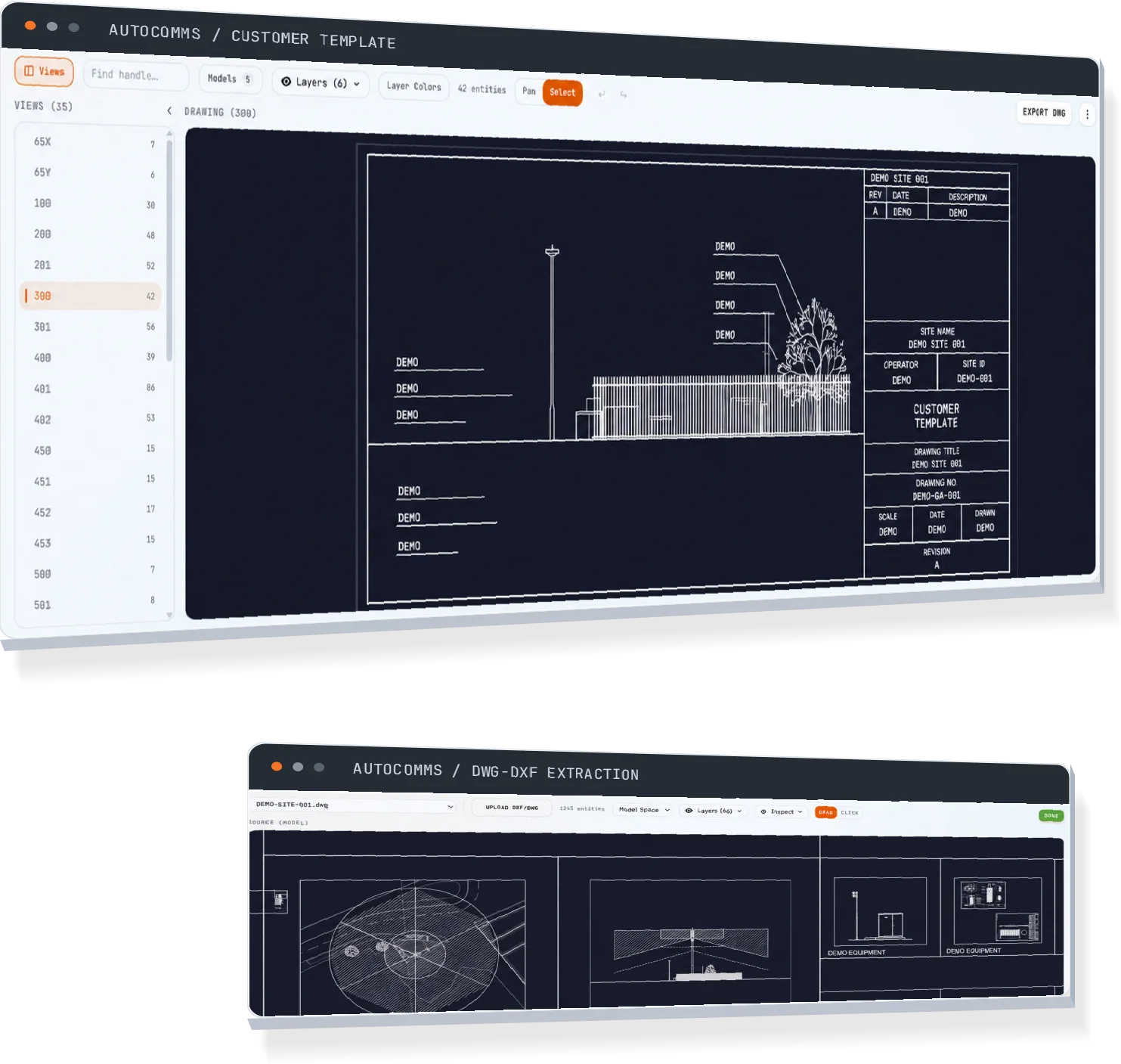
Fast.Accurate.
One source of site, equipment and configuration data for connected, more accurate drawing information.
VMO2 Street Works GA completed in 2 hours.
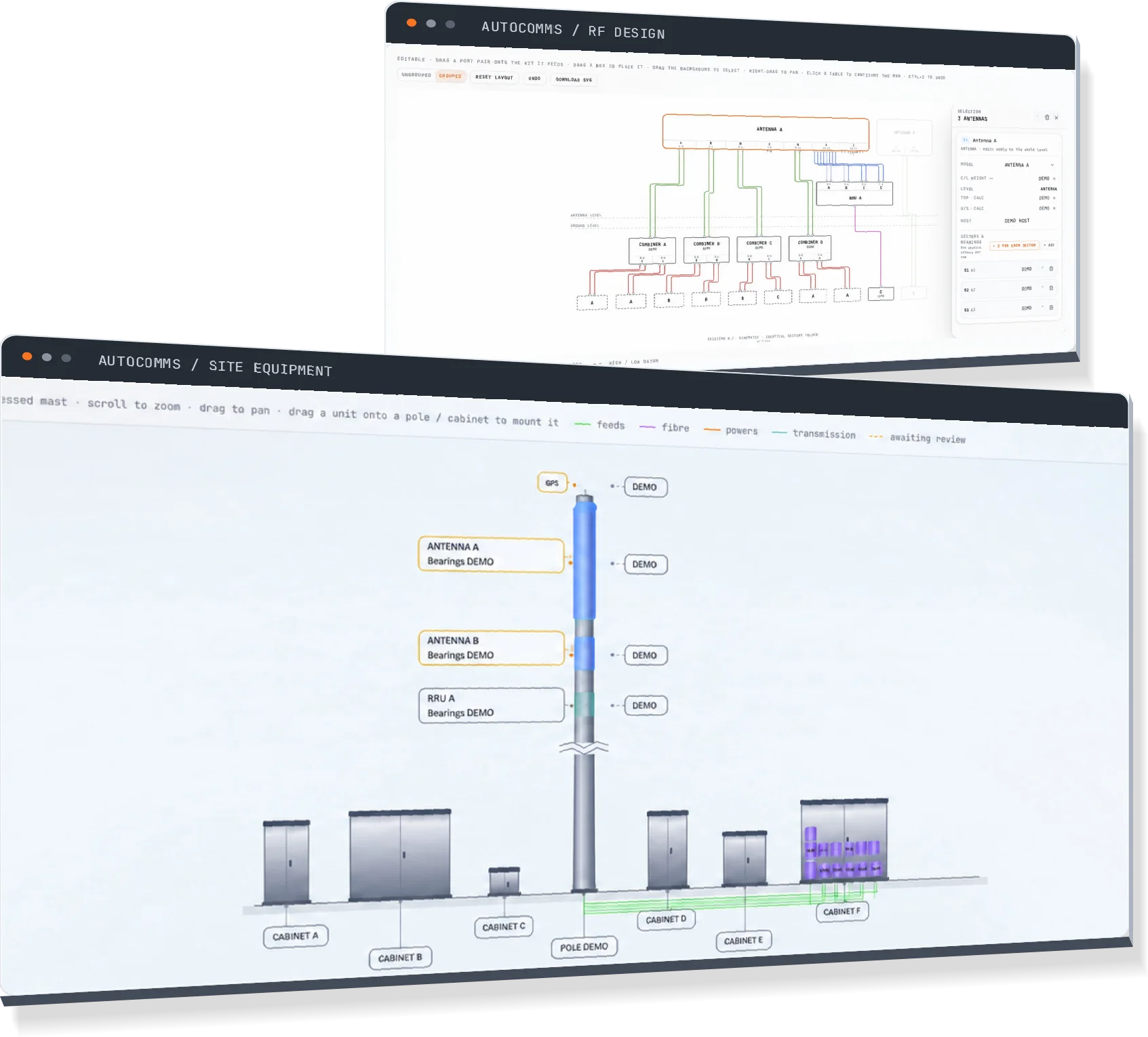
Messy surveys.Structured site data.
Smart AI survey ingest brings unstructured survey information into the AUTOCOMMS workflow.
- 01
Smart AI survey ingest
Turn messy survey inputs into structured site data and an equipment list.
- 02
One source of data
Structured site and equipment information reused across connected design and drawing workflows.
- 03
Agentic user workflows
Link with Claude and ChatGPT to work with AUTOCOMMS through AI agents.
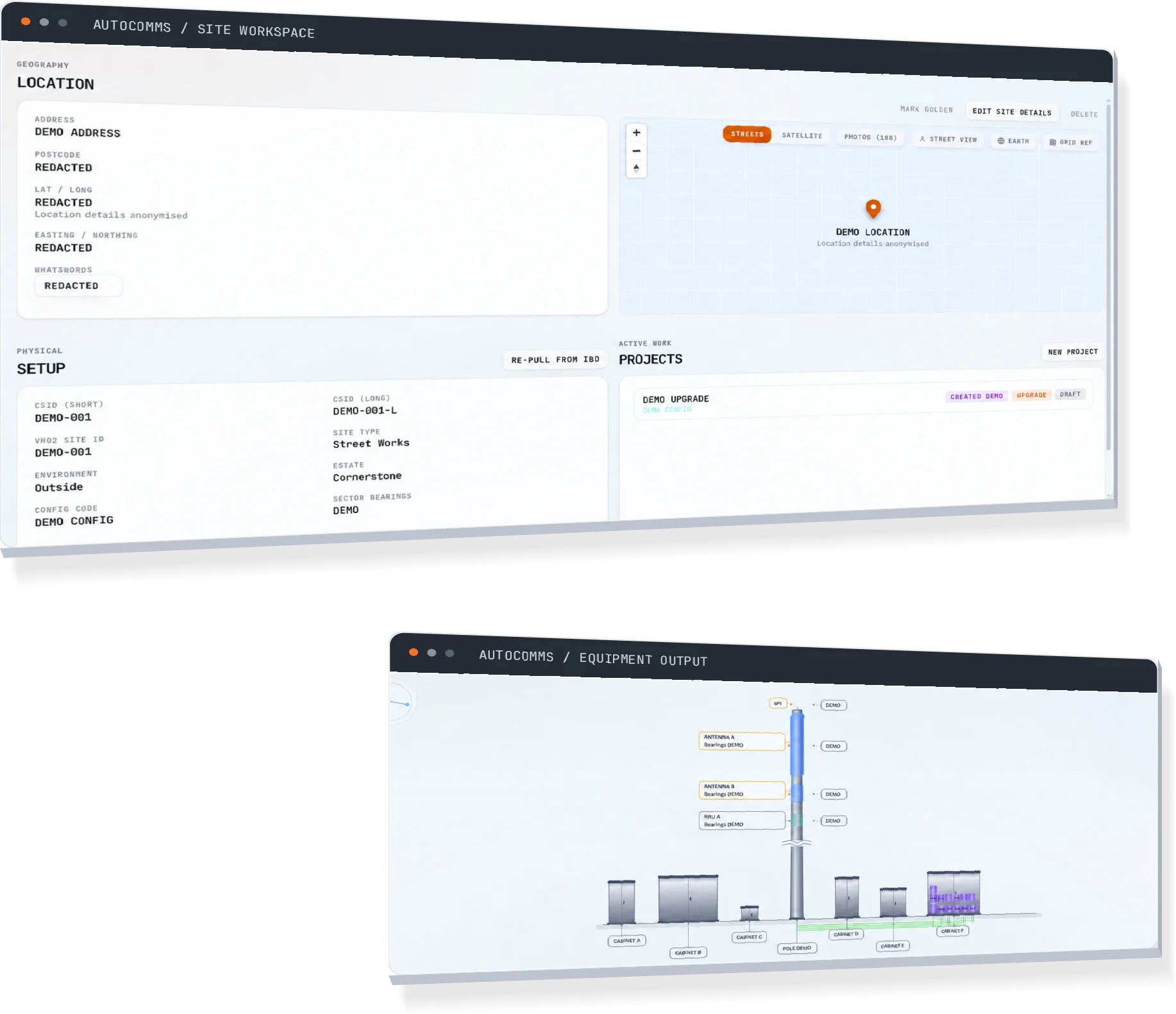
Change theconfiguration.Export CAD.
Shared site, equipment and configuration data connects schedules and CAD output. Change the configuration for instant export.
- 01
Editable RF schematics
See equipment connections and edit the RF layout.
- 02
Instant CAD export
Render drawing information in the customer's or estate owner's own templates, with instant CAD export.
- 03
Connected schedules
Use the same equipment data across schedules and drawing information.
Drag a box · drag a run off a port pair onto a radio · click a cable, then remove it · scroll to zoom
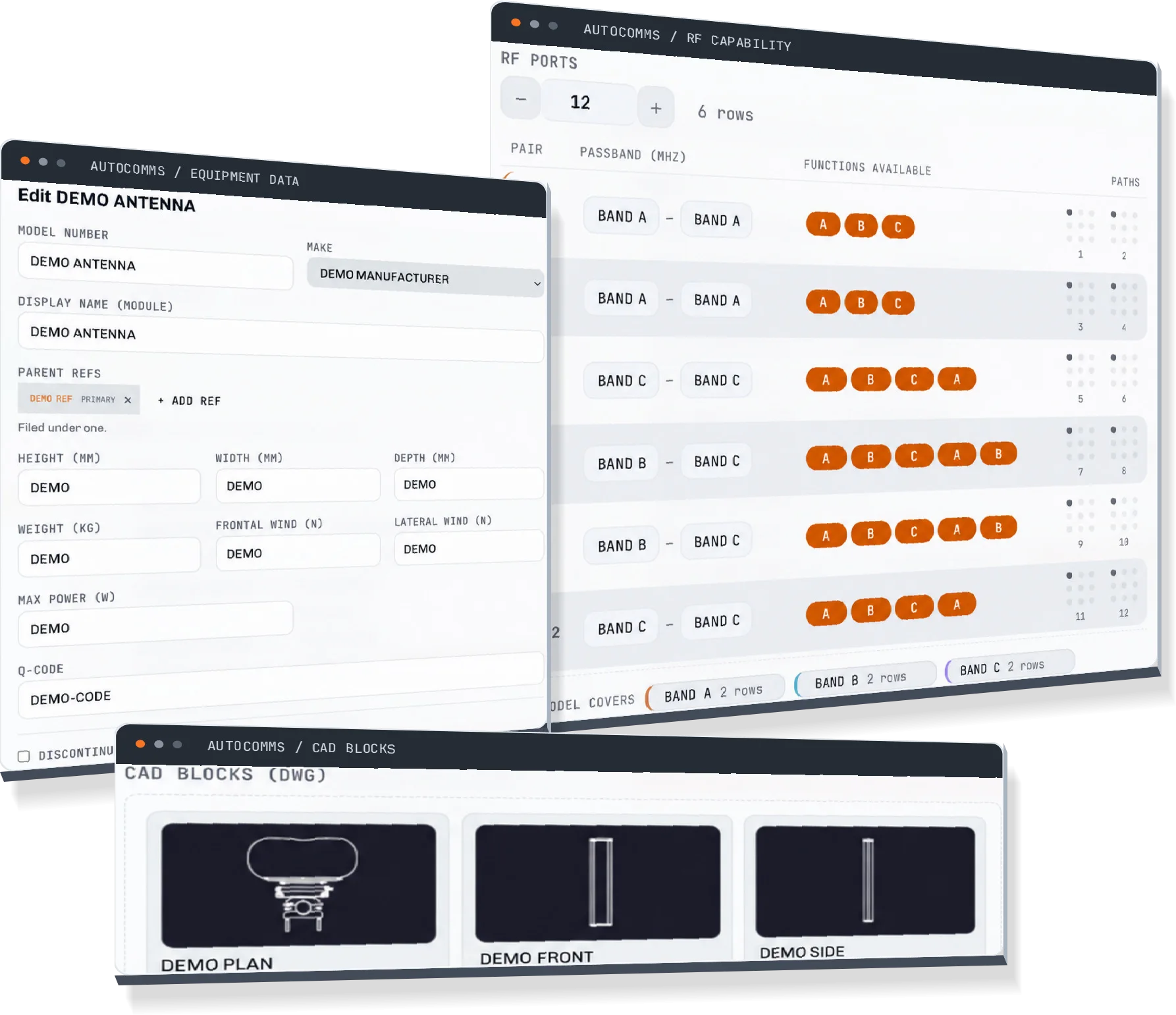
Engineeringknowledge,connected.
Managed equipment data and reusable drawing assets support consistent, accurate design information.
- 01
Equipment definitions
Model references, dimensions and weight.
- 02
RF capability
Port pairs, passbands and supported bands.
- 03
Drawing assets
DWG blocks linked to the equipment record.
Full GA + DD.One platform.
Building towards full General Arrangement and Detailed Design on one platform, connected through a master site record.
- 01
Full GA + DD workflows
Extend the current VMO2 Street Works GA capability into full design delivery.
- 02
Central equipment catalogue
Drawing creation backed by centrally managed equipment data and reusable drawing assets.
- 03
A master site record
Extend one source of site data across project changes, schedules and full GA/DD drawings.